Discovery of a new ladybird spider species in Morocco: Eresus rubrocephalus
Morocco stands out for its exceptional biological richness, as recognized by the National Assessment of Biodiversity and Ecosystem Services. National terrestrial biodiversity includes more than 25,597 animal species and 7,491 species of plants and fungi, of which over 3,900 are endemic. Endemism rates are particularly high in certain groups, notably amphibians, reptiles, and freshwater fish, confirming the Kingdom’s role as a major reservoir of biodiversity.
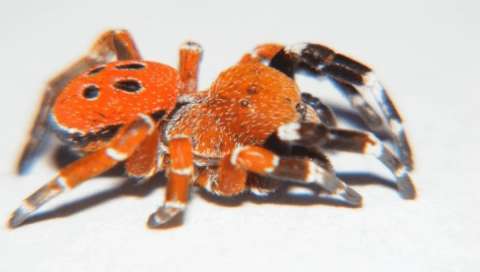
In this context, a new spider species, previously unknown to science, has recently been described in Morocco by an international team of researchers. Named Eresus rubrocephalus, this species belongs to the family Eresidae, commonly known as ladybird spiders.
A species with unique characteristics
Eresus rubrocephalus is distinguished by an exceptional coloration: in males, the head (prosoma), chelicerae, and certain ventral parts are entirely covered with carmine-red hairs, a feature unique among all known species of the genus Eresus. The abdomen is also red and marked with four black spots, the first pair displaying a characteristic teardrop shape.
The identification of this new species is based on an integrated scientific approach combining:
-
detailed morphological analysis of external features and reproductive organs;
-
advanced microscopic examinations;
-
and genetic analyses (DNA barcoding – COI gene), which confirm its status as a distinct species.
Location and habitat
Known specimens were collected in northern Morocco, in the Sidi Allal El Bahraoui area, within cork oak forests (Quercus suber), on iron-rich red sandy soils with sparse herbaceous vegetation. Adult males are mainly observed in early summer (June), corresponding to their reproductive period. To date, the female of the species has not yet been observed.
A discovery of high conservation value
The discovery of Eresus rubrocephalus highlights the importance of targeted fieldwork in still insufficiently explored habitats and confirms that Morocco represents a hotspot of biological diversification, particularly for certain faunal groups.
It also reinforces the need to continue efforts in research, monitoring, and conservation, in line with national and international biodiversity objectives, notably the Kunming–Montreal Global Biodiversity Framework.
Scientific reference
Gál, J. et al. (2025). The Red-Colored Oddball—A New Ladybird Spider with Unusual Coloring from Morocco, Eresus rubrocephalus sp. nov. Animals, 15, 2707.